 avarek2023WP
Promising Business in Central Asia: 7 Fast-Growing Niches for the Next 5 Years
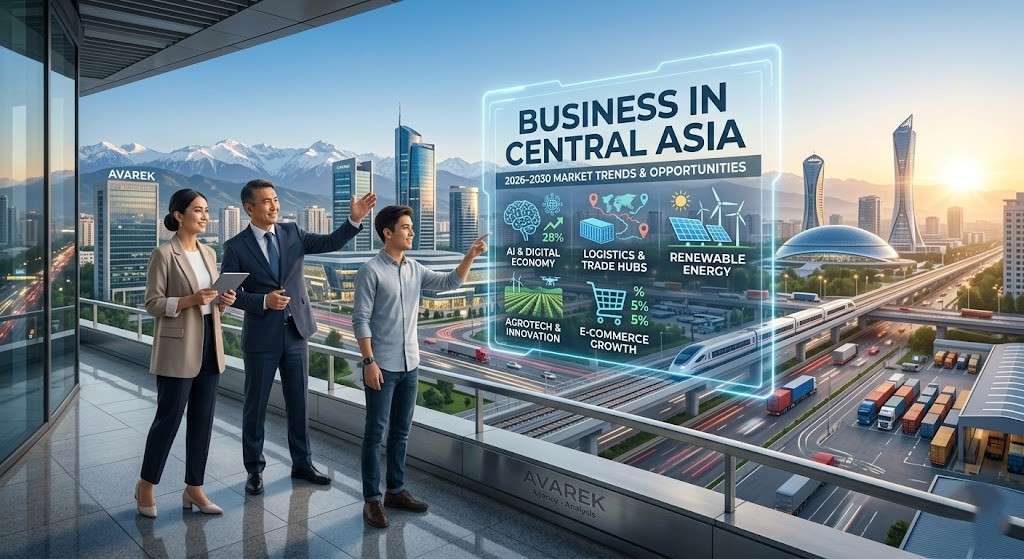
Central Asia is entering a new large-scale cycle of economic growth. Rapid population growth, urbanization, and active government investments in infrastructure are turning the region into one of the most attractive markets for entrepreneurs and investors.
For local businesses and international players, this means one thing: old approaches are no longer working, and at the intersection of new technologies, massive volumes of customer demand are forming. The marketing agency AVAREK analyzed key macroeconomic trends and identified 7 main niches that will grow faster than the market in the next 5 years.
Main Trends and Promising Business Directions
Investments in the economies of Uzbekistan, Kazakhstan, and other countries in the region are clearly distributed across three main directions: energy, technology, and logistics. Business projects that unfold at the intersection of these three vectors are guaranteed to receive maximum ROI (return on investment).
Below is a detailed analysis of the sectors where the highest demand for B2B and B2C services will form in the coming years.
Top 7 Niches for Business with High Growth Potential
1. Alternative Energy and Renewable Energy (Green Technologies)
The region is facing a growing electricity deficit amid an industrial boom. Solar and wind energy, modern energy storage systems (batteries), as well as energy-efficient technologies for commercial facilities are not just a “green trend,” but a strict economic necessity for the survival of enterprises.
2. IT Sector, Artificial Intelligence, and Process Automation
The digital transformation of business in Central Asia is in full swing. The massive transition of companies to CRM systems, the implementation of end-to-end analytics (here you can link to your analytics service) and sales department optimization are forming a stable demand for qualified developers and integrators.
-
Growth Drivers: AI solutions for routine automation, turnkey software development, mobile development, and cybersecurity.
3. Logistics, Fulfillment, and Transport Corridors
The geographical location turns the region into a key transit hub between China, Europe, the Middle East, and South Asia.
-
What’s in Short Supply: Class “A” warehouses, modern logistics centers, fulfillment operators for marketplaces, and “smart” supply chain management services.
4. Modernization of Agribusiness and Deep Processing
Simple raw material trade is becoming a thing of the past. The main profitability is now embedded in value-added technologies: deep industrial processing of agricultural products, automated greenhouse complexes, launching modern packaging lines, branding, and systematic export of finished food products.
5. Construction, Development, and Urban Infrastructure
The pace of urbanization requires a qualitative change in construction approaches. Investors are looking for not just residential square meters, but technological business centers, smart commercial real estate, and engineering solutions for Smart City. The demand for related B2B marketing and construction consulting in this area will only grow.
6. Private Medicine, Diagnostics, and Wellness
With the growth of the population’s income, the culture of consuming medical services is changing. Investors should pay attention to opening multidisciplinary private clinics, modern diagnostic and vaccination centers, the development of telemedicine, and launching projects in the field of active longevity (wellness industry).
7. Development of E-commerce, Fintech, and Service Economy
E-commerce, marketplaces, payment solutions, and express delivery services continue to aggressively capture market shares from traditional offline retail. Along with the consumer sector, the service economy is also growing: businesses require quality B2B services, from outsourcing to comprehensive promotion.
How Can Businesses Adapt to New Economic Realities?
To take leading positions in the Central Asian market, companies need to implement changes now. It will require not just a market presence, but building a strong brand and end-to-end digital infrastructure.
Advice from AVAREK: Experience in conducting marketing campaigns in the region shows that the brands that first automate the processing of incoming traffic (ensuring a response to hot leads within 5–10 minutes) and use predictive analytics to forecast demand win.
If you want to launch a project in one of these niches or scale your current business using modern digital tools, sign up for a consultation with our agency’s experts.
And what do you think, which of these 7 niches will break ahead faster than the others in your country? Share your opinion in the comments below!