 avarek2023WP
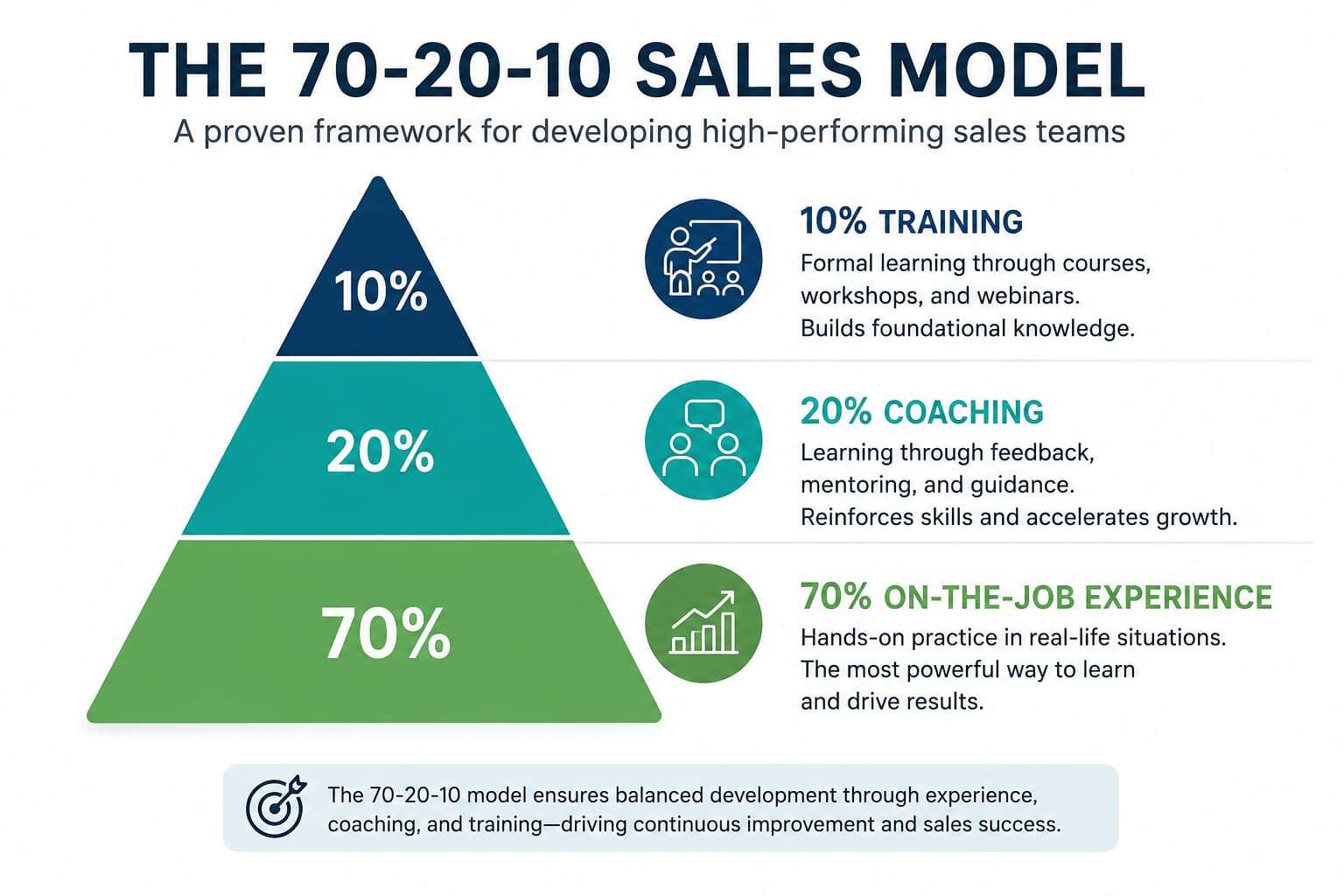
The 70-20-10 model helps improve sales team performance through practical experience, coaching, and continuous learning.
Why Sales Training Doesn’t Always Deliver Results
Many companies invest substantial resources every year in training their sales teams. They organize sales workshops, send employees to seminars, purchase online courses, and hire professional business trainers. Yet, just a few weeks later, performance often returns to its previous level.
The problem is usually not the quality of the training—it is the lack of a system for reinforcing new skills.
Research and management best practices show that professional competencies are developed not only through theory but also through continuous practice and regular feedback. This is the foundation of the 70-20-10 employee development model.
If your goal is to increase sales, improve conversion rates, and build a high-performing sales organization, it’s essential to understand how this model works and how to integrate it into your team’s daily routine.
What Is the 70-20-10 Model?
The 70-20-10 model suggests that professional skills are developed through three primary sources:
70% — Hands-On Experience
Most professional growth comes from performing real work, including:
Cold calling
Handling inbound inquiries
Client meetings
Sales presentations
Negotiations
Objection handling
Preparing commercial proposals
Customer relationship management
Closing deals
This is where sales professionals learn to make decisions, adapt to different customer personalities, and continuously improve their selling techniques.
20% — Coaching and Feedback
After every significant interaction or deal, employees should receive constructive feedback.
Effective development activities include:
Reviewing negotiations
Analyzing recorded sales calls
Joint client meetings with managers
One-on-one coaching sessions
Mentorship
Knowledge sharing among salespeople
Regular team meetings focused on lessons learned and common mistakes
This continuous feedback loop enables employees to correct mistakes faster and accelerate professional growth.
10% — Formal Learning
Only a small portion of development comes from structured education, such as:
Sales training programs
Books
Webinars
Online courses
Corporate training
Internal guidelines
Sales standards
Sales scripts
Formal education remains valuable, but without practice and feedback, it rarely leads to lasting behavioral change.
How to Apply the 70-20-10 Model in a Sales Team
An effective sales development system should become part of everyday work.
Every Day
Calling prospects and customers
Client meetings
Sales negotiations
CRM activities
Handling objections
Every Week
Reviewing recorded sales calls
Analyzing won and lost opportunities
Receiving personalized coaching from the sales manager
Sharing successful sales cases with the team
Every Month
Learning new sales techniques
Attending sales workshops
Developing negotiation skills
Updating sales scripts
Studying new products and services
Why Most Companies Make the Same Mistake
In many organizations, employee training follows this pattern:
Employees attend a two-day training program.
They receive certificates.
They return to their normal routines.
Within a few weeks, only a small fraction of what they learned is actually being used.
This happens because organizations often lack:
Consistent practice
Accountability for applying new techniques
Coaching and mentorship
Regular feedback
Performance reviews
Without these elements, the return on investment in training is significantly reduced.
Business Benefits of the 70-20-10 Model
When implemented correctly, the 70-20-10 model helps companies:
Improve overall sales team performance
Increase sales conversion rates
Shorten the sales cycle
Accelerate onboarding of new salespeople
Reduce sales mistakes
Improve negotiation quality
Increase average deal value
Strengthen customer retention
Build a strong learning culture
A Practical Example
Imagine two sales representatives.
The first attends five training programs during the year but rarely receives coaching or feedback.
The second attends only one training program but negotiates with customers every day, reviews deals weekly with a manager, and continuously analyzes personal performance.
In most cases, the second salesperson achieves significantly better results because knowledge is immediately transformed into practical skills through consistent application and feedback.
The Role of the Sales Manager
A sales manager should be more than someone who monitors sales targets—they should also serve as a coach and mentor.
Key responsibilities include:
Observing sales activities
Monitoring sales performance metrics
Listening to recorded sales calls
Conducting deal and negotiation reviews
Helping employees eliminate weaknesses
Developing each salesperson’s strengths
Ensuring consistent use of new sales techniques
This leadership approach creates sustainable, long-term improvement in sales performance.
Conclusion
The 70-20-10 model demonstrates that outstanding sales performance cannot be achieved through training programs alone.
Real growth begins when knowledge is applied every day, managers provide regular and constructive feedback, and learning becomes an integral part of the organization’s operating system rather than a one-time event.
If your goal is to increase revenue, improve sales effectiveness, and build a world-class sales team, don’t start by searching for another training course. Start by building a system where employees continuously practice, receive coaching, analyze their performance, and develop their skills every day.
Let’s continue the conversation on our Telegram channel:
The 70-20-10 Model in Sales: How to Develop Sales Managers and Improve Sales Team Performance